How to layer for a cold city winter
Cold in a city is a different problem from cold on a mountain. You walk, you stand on a platform, you step into a warm tram, you walk again. The answer is not one heavy coat. It is three light layers that each do one job — and that you can open, close or take off as the day changes.
1. The base: something that sits close and breathes
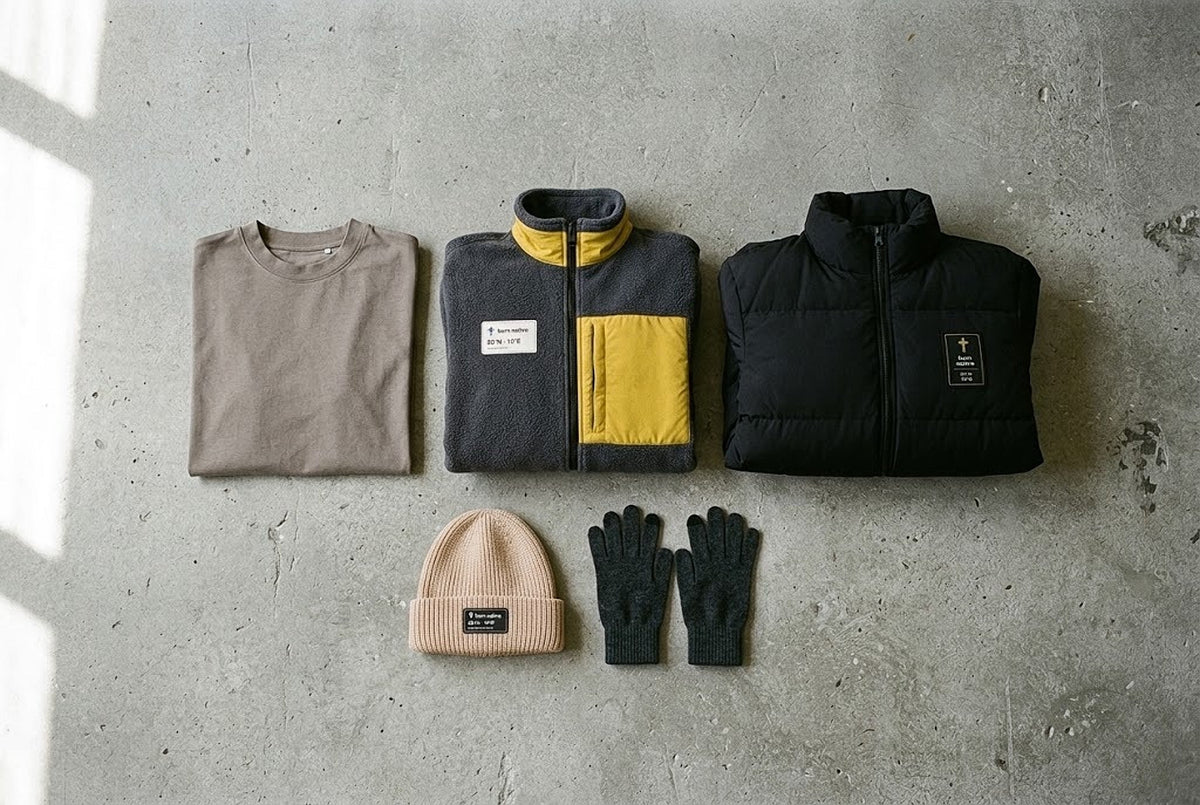
Start with a heavyweight cotton tee or a long-sleeve. Heavy cotton holds its shape under other layers and does not cling. Our Native Heavy Tee is 300 gsm cotton jersey with a dense ribbed collar, so it still looks right when the jacket comes off indoors.
2. The middle: the warmth you can unzip
This is the layer that does most of the work. Fleece and sherpa trap warm air without weight, and a zip lets you vent heat when you are moving.
- Col Contrast Fleece — 300 gsm anti-pilling polyester fleece, full zip, nylon chest pocket.
- Ridge Sherpa Quarter-Zip — high-pile sherpa with a stand collar for the neck.
- Meridian Cable Crewneck — a wool-blend cable knit if you prefer knitwear to fleece.
On mild days the middle layer is the outer layer. That is the point of it.
3. The outer: wind, rain and real cold
The outer layer should stop wind first. Wind takes heat faster than low temperature does. Pick by weather, not by habit:
- Dry and freezing: a padded jacket. The Datum Puffer Jacket has a high stand collar and wide quilting; the Ridge Padded Anorak is a pullover cut roomy enough to wear over a fleece.
- Wet and windy, above zero: a shell. The Weather Softshell Jacket is wind- and water-resistant with an adjustable hood.
- Somewhere in between: a vest over a fleece keeps your core warm and your arms free — try the Datum Puffer Vest.
The small things
Most heat leaves through the head, neck and hands. A beanie, a balaclava on the worst days and a pair of thick socks change how a whole outfit feels. A chest sling keeps your phone and keys out of cold pockets.
A simple rule
If you are warm standing still, you will be too warm walking. Leave the house a little cool and let the walking do the rest — then open the zip of the middle layer, not the outer one.


Journal
More stories

50°N · 10°E, explained
Two numbers on every label. Where the point is, why we chose coordinates instead of a slogan, and how to read them.

Why a plain cross
No crest, no animal, no initials. Where our mark comes from, the one small cut that makes it ours, and why it...

Looking after padded and fleece pieces
Wash less, wash right. How to clean and store padded jackets, fleece, sherpa, shells, knitwear and heavy cotton so they last for...

How to layer for a cold city winter
Three light layers beat one heavy coat. A simple system for walking, waiting and warm trams — base, middle and outer, and...